Preliminary results of RMEF’s first in-house pilot study provide evidence that prescribed burning and herbicide treatments increase the quality of food for elk in the eastern Kentucky elk restoration zone.
“It’s extremely exciting, and honestly, I did not expect this strong of results for a pilot,” said RMEF Director of Wildlife Research Heather Abernathy.
Abernathy worked closely with RMEF Regional Habitat Manager Will Bowling and partners Kentucky Department of Fish and Wildlife Resources (KDFWR), the University of Kentucky and the University of Tennessee to design and implement the study.
RMEF funded three KDFWR technicians and their truck fuel and field equipment as they spent six weeks in 2025 collecting elk scat in the Kentucky coalfield elk zone. They sampled areas where RMEF has helped fund prescribed burns and aerial herbicide spraying in 2023 and 2024, and in places that had been treated with prescribed fire every year from 2022 to 2025. They also sampled from untreated areas for comparison.
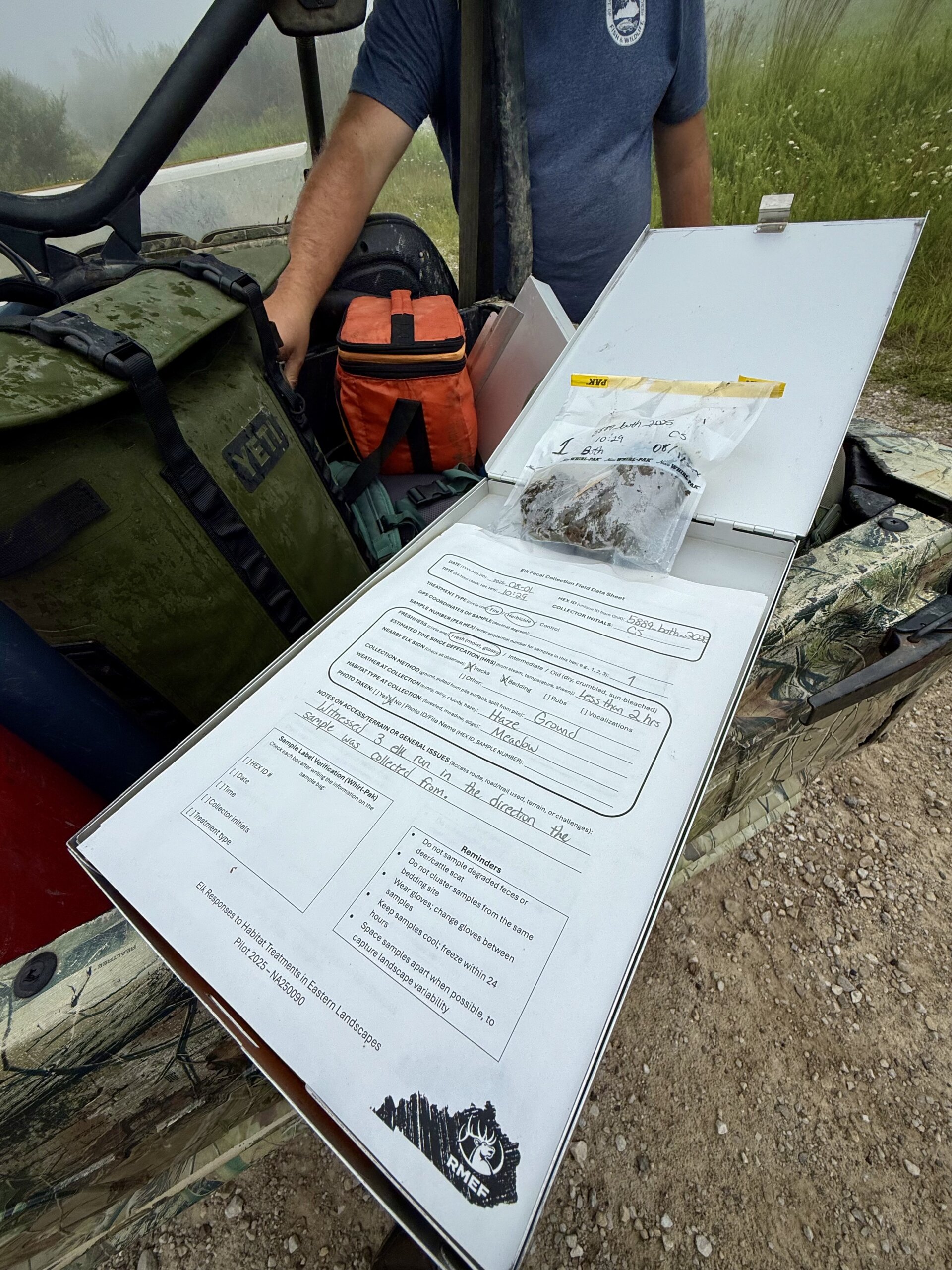
The technicians collected in late summer to cover the window when nutrition plays an especially vital role in successful pregnancy and calf survival.
Labs analyzed the samples to determine the sex of the elk, what the elk were eating and the nutritional value of what they ate. Abernathy then compared the results using statistical methods.
Labs compared fecal samples from treated versus untreated areas to look for measurable differences in short-term nutrition. Samples from treated areas held more digestible, protein-rich forage than those in untreated areas, with herbicide treatments showing the biggest bang for the buck. GPS data from KDFWR added another layer, indicating that collared elk preferred foraging in treated areas within their home ranges.
The information has practical applications for RMEF as the organization strives to put its member dollars on the ground efficiently, and the results provide KDFWR biologists with empirical confirmation that these tools benefit elk nutrition in the region.
“We’ve been putting in a lot of time and resources, and RMEF has graciously provided a lot of grant money to do habitat work,” said KDFWR Bear and Elk Program Manager John Hast. “Something I’ve grappled with as a habitat manager is, we may go burn a field and go back and look at it in a year, and it looks great. But is it great? Do the elk think it’s great? It’s exciting just to be able to say ‘hey, we are actually making a difference from the elk’s standpoint.’”
Bowling agreed. “We can see the vegetation response, but being able to look at the outcomes on elk physiology is the piece we’ve never had before.”
The success of the pilot has created momentum for a larger study to move forward in the future.
“This was a pilot study to see if this would work, and then if it did work, we would build out a phase two,” Abernathy said.
An upcoming phase two could include running similar pilot studies in different areas across the East or expanding the sampling effort in the Kentucky elk zone, perhaps looking at the effects of different habitat treatments or sampling across different time frames.