If you hunt with a rifle, you know how important your rifle setup is. Everything must be exactly right to ensure you successfully make a clean, ethical shot at the appropriate and usually very tense moment. Everything works in conjunction with the other—rifle, optic, ammo, and let’s not forget the suppressor. According to the ASA (American Suppressor Association) for those of you in most of the country, hunting with a suppressor is legal and I dare say a must. The ASA was established in 2011 and has been at the forefront of lobbying at the state level to legalize suppressors. 42 of 50 states allow the ownership of suppressors and forty-one allow use for hunting. Their goal is to make suppressors legal in all fifty states.
While most people are familiar with suppressors, many are not. Fortunately, that is rapidly changing thanks to more information, education, and easier accessibility. A record number of suppressors are being sold and approved by the ATF with over 3,150,000 currently in circulation.
What It Does
I am sure most of us have seen the typically long-ish cylindrical tubes that attach to the end of the rifle’s muzzle. This device decreases the rifle’s report. It does this by allowing hot gases from the ignition of the round to expand and cool inside the suppressor before the gases come into contact with cooler ambient air. The loud report we typically hear is simply hot gases slamming into cooler ambient air.
Benefits
There are several benefits to hunting with a suppressor attached to your rifle. The first one is the most obvious, it’s quieter. But what does this mean? Even with a suppressor attached the report of a centerfire rifle isn’t completely silent and actually it’s far from it. But it is quiet enough to keep the shooter’s hearing from being damaged when used properly. You may have heard the term “hearing safe,” which means the suppressor decreases the report enough to prevent damage to the shooters hearing. This noise level cut off is 140 dB and lower. I should also note that it’s good for one shot at this level as well. In other words, if you shoot three or four rounds in succession that is not technically hearing safe and you are doing damage, although slight, to your hearing.
When I’ve hunted without a suppressor, I always keep hearing protection handy. This means I was either wearing them while moving through the field or I’d have to put them on just before taking a shot. Either way, it’s a pain, but I will not take chances with my hearing.
Suppressors also reduce recoil when compared to a bare muzzle. Some hunters use muzzle brakes to tame recoil and while a suppressor is not as effective as a muzzle break it still lessens recoil a bit. I tend to describe it as slowing the recoil process as there is still quite a push. Overall, your perception of recoil changes and it’s more pleasant and confidence inspiring for the shooter. There are now muzzle brakes for suppressors and companies like Dead Air make brakes for some models. They also have their RXD30Ti 30 Cal Suppressor suppressor which has an integrated brake design for reduced recoil.
Using a suppressor for hunting offers multiple benefits which cannot be realized until you are in field using one. Yes, it adds length to what may be an already long rifle, but to counter that concern, Dead Air recently introduced the Nomad Ti OTB (over the barrel) suppressor, which reduces the overall length of your rifle.
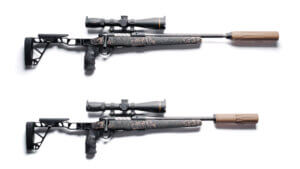
You can purchase the Nomad Ti OTB and learn about the full line of Dead Air Suppressors at a local knowledgeable Dead Air Silencers Dealer.
Coming up, we will be looking at other factors associated with hunting with a suppressor.